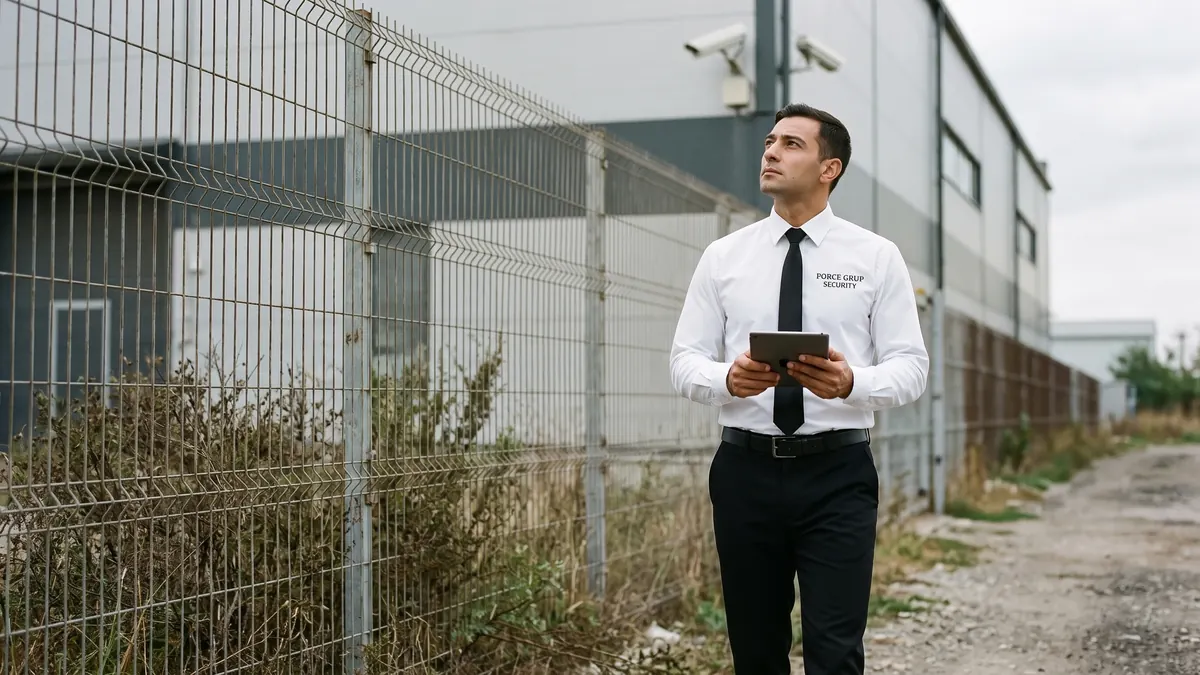
Most of an event's security is decided before the first spectator reaches the gate. The site visit is where the plan on paper meets reality: a door that will not open, a ramp blocked by a catering truck or an area with no radio signal can completely change how the teams are deployed.
Why we start with the venue, not with the number of officers
The number of officers is a consequence, not a starting point. The same capacity of 5,000 people calls for a different deployment in a seated hall with six exits than in an open-air arena with a standing crowd and access on one side only. That is why, before any serious quote, the coordinator has to walk the venue along the routes the audience, artists, suppliers and emergency crews will take.
What we check on site
- The perimeter and fencing. Where the controlled area ends, which sections can be climbed, and where mobile fencing or additional fixed posts are needed.
- Access points. Separate entrances for the public, artists, press, suppliers and guests, plus access for emergency vehicles, which must stay clear throughout the event.
- Evacuation routes. Exits, corridors and stairways must be kept clear and usable at all times, as required by the General Fire Protection Rules (Ministry of Internal Affairs Order no. 163/2007). We check the direction in which doors open, the panic hardware, the emergency lighting and the signage.
- Areas where crowds build up. Bars, toilets, merchandise stands and the area in front of the stage, where crowd density rises fastest.
- The stage and backstage. Artist access, the route from the dressing rooms to the stage, the technical area and the positions of the front-of-stage barriers.
- The surroundings. Car parks, drop-off areas, public transport stops and the routes the audience takes when leaving.
- Communications. Radio coverage across the whole venue, especially in basements and behind the stage, and the location of the command post.
What we discuss with the organiser
The venue tells only half the story. The other half comes from the organiser: the expected attendance and the audience profile, gate opening time and the artists' schedule, the policy on prohibited items and drinks, the types of tickets and accreditation, and the number of suppliers and their access times. A concert with a young audience and a corporate gala in the same hall carry completely different risks.
“A good security plan only shows after the event: there were no queues, nobody got where they shouldn't have, and everyone went home safely.”
Authorities and approvals
Romanian Law no. 60/1991 on public gatherings exempts cultural, artistic and sporting events from the prior notification requirement, except for international sports competitions. This does not mean the event takes place without the authorities. For large events, the organiser coordinates with the Gendarmerie and the Police for the outer area and crowd flows, while fire safety falls under the Emergency Situations Inspectorate (ISU). The buildings and installations subject to fire safety approval or authorisation are listed in Government Decision no. 571/2016.
A security company does not replace these institutions, but it has to know exactly what each approval requires, because the security deployment puts many of those conditions into practice: clear evacuation routes, capacity limits respected and controlled access.
What comes out of the assessment
After the visit, the coordinator builds the event security plan. It usually includes:
- a map of the sectors, with fixed posts and patrol areas;
- the number of officers in each sector and the shift schedule;
- the access rules for each category of attendee;
- incident procedures: medical emergency, lost person, show stop, evacuation;
- the chain of command, the radio channels and the contact people at the organiser, the venue and the authorities.
The plan is presented to the team at the briefing before the gates open, and every officer knows their sector before the audience comes in.