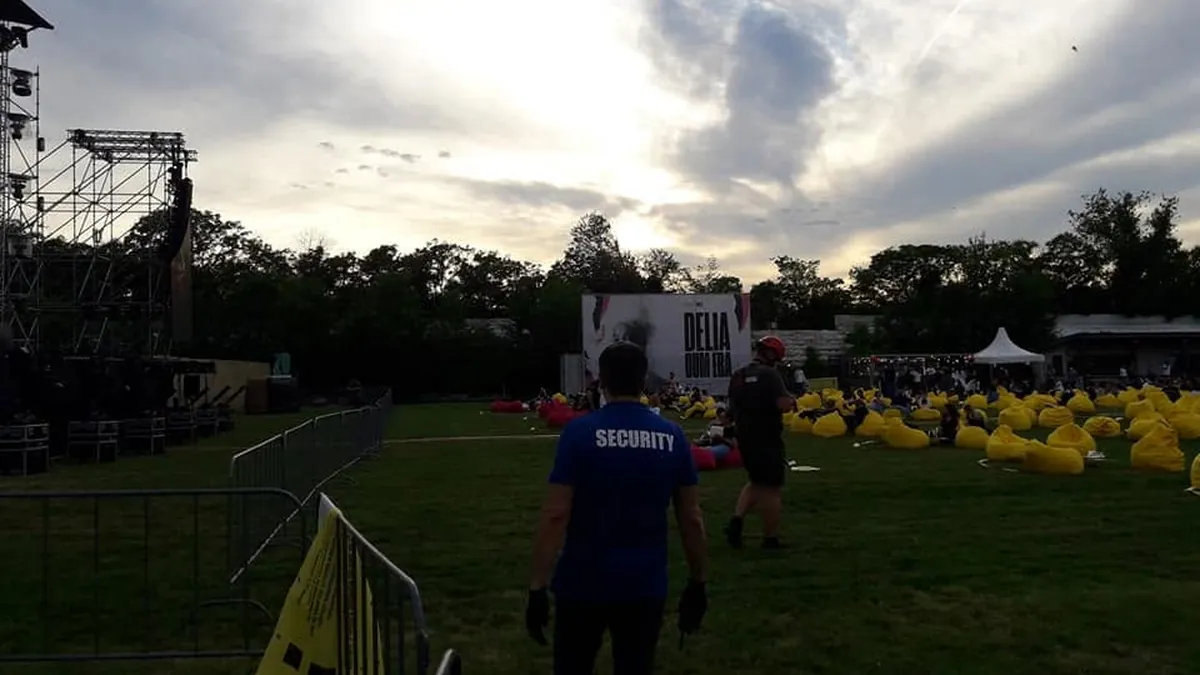
An open-air concert is not guarded as a single space. Each area has a different audience, different risks and different access rules. That is why we divide the arena into sectors, each with a sector supervisor, its own team and a clear radio channel.
The sectors of an arena
1. The outer perimeter
The arena fence, the surrounding areas and the car parks. This is where we prevent entry without a ticket and spot suspicious behaviour before it reaches the gates. The public area outside the arena is usually the responsibility of the Gendarmerie and the Police, with whom the outer sector stays in constant contact.
2. The entry gates
Ticket scanning, body and bag searches, and separate flows for the public, guests and accredited staff.
3. The audience area
Patrols and fixed posts at barriers, bars, toilets and evacuation routes. Officers monitor crowd density and flag early any area where too many people are gathering.
4. The front of stage
The barrier between the audience and the stage, with officers who receive people pulled out of the crowd, give first aid until the medical team arrives and watch for signs of pressure in the front rows.
5. Backstage and the artist area
Access by list and accreditation only, with checks at every crossing point between the technical area, the dressing rooms and the stage.
6. VIP and technical areas
The sound and lighting control positions, the generators and the guest areas, each with its own access rules.
“Every officer needs to know three things: which sector they cover, who they report to and how their sector is evacuated.”
Coordination between sectors
All sectors report to a command post, staffed by the security coordinator, the organiser's representative and, at large events, representatives of the authorities and the medical teams. Romanian Law no. 60/1991 on public gatherings requires organisers to provide their own stewarding, with staff wearing distinctive insignia agreed with the Gendarmerie. At concerts, this role is in practice filled by the contracted security team.
Procedures agreed before the concert
- Show stop. Who can call a stop, how it reaches the stage and who addresses the audience.
- Weather. The wind or storm thresholds at which the programme is suspended, and the shelter or evacuation route.
- Medical emergencies. The route medical crews take through the crowd and the pick-up points.
- Lost people. Especially children, with a meeting point that is agreed and announced.
- Evacuation. The order in which the sectors are cleared and the exits used for each.
The end of the concert
At the end, the whole arena empties within a few dozen minutes. Teams reposition along the exit routes, and the egress gates are opened before the last song so the audience can leave without bottlenecks.