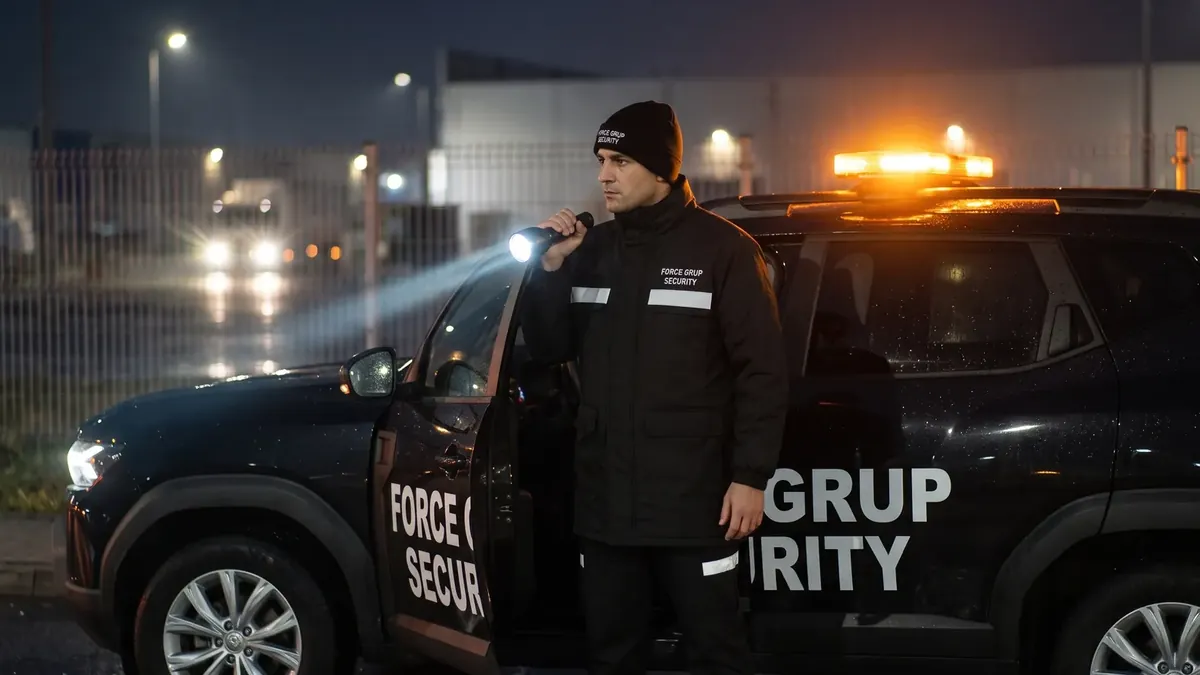
Post orders are the instructions a security officer works to on every shift. When they are well written, any trained officer can take over the post and know exactly what to do. When they are vague, everything depends on the memory of whoever was there before.
What the law says
Article 5 of Romanian Law no. 333/2003 provides that the guarding plan also includes the post orders. Article 46 lists, among the obligations of security staff, compliance with the general and the specific orders of the post. The implementing rules approved by Government Decision no. 301/2012 specify that the shift supervisor or site supervisor briefs staff on the post orders and is responsible for how they are carried out.
General post orders
General orders cover the obligations that apply to every post and follow directly from the law. They include:
- knowing the vulnerable areas and points of the site;
- allowing access only under the legal conditions and the internal rules;
- stopping and identifying suspicious persons and handing offenders caught in the act over to the police;
- immediately informing their line manager and the client's management of any incident;
- taking first measures in the event of a fire, a utility failure or a disaster, and alerting the emergency services;
- no alcohol, and never leaving the post without a replacement.
Specific post orders
Specific orders apply to each individual post, and they are what makes the difference in practice. They must not leave out:
- The limits of the post. Which areas it covers, its patrol route and at what intervals.
- The schedule. The operating hours of the post and of the site, including weekends and public holidays.
- Access rules. Who is entitled to enter and on what documents, how visitors are logged and what to do with people who have no appointment.
- Vehicle access and goods leaving the site. Which documents are checked and who signs off goods or equipment leaving the site.
- Keys and locked areas. Which keys are kept at the post, who they are handed to and how this is logged.
- Technical systems. How the alarm is set and unset, what to do after a false alarm and who is notified.
- The contact list. The control room, the site supervisor, the client's representative, the police, the fire brigade and the ambulance service.
- Incident procedures. Concrete steps for intrusion, fire, utility failure and medical emergency.
“Good post orders answer the question every new officer asks at three in the morning: what do I do now, and who do I call?”
Post orders and the post registers
Post orders are applied together with the guarding service documents set out in the implementing rules: the register of handover reports, the register of personnel access, the inspection register and the incident register, in which every incident is described in an incident report. At handover, the outgoing officer briefs the incoming officer on the situation at the post, and the incoming officer confirms with a signature.
When they are updated
Post orders are part of the guarding plan, so they change along with it: when the schedule changes, when new systems are installed, when the access rules change or after an incident that revealed a gap in the procedure. Post orders that are several years old, at a site that has changed, are one of the first things we check when we take over a contract.